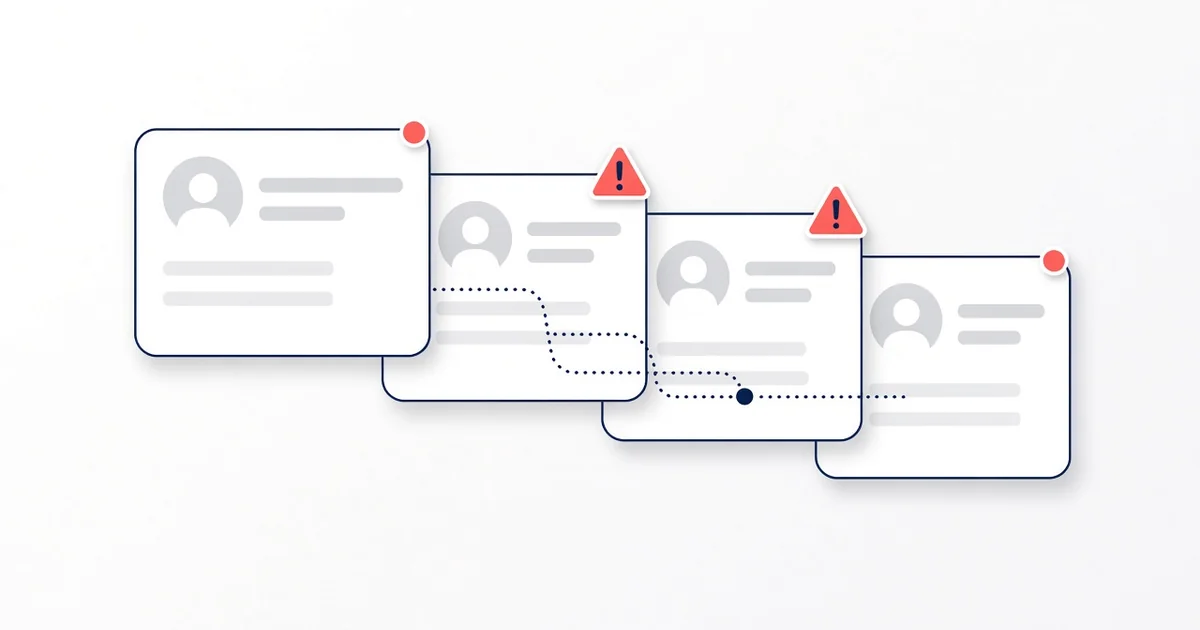
Welcome offers, free bets, deposit matches and reload bonuses are some of the most effective acquisition tools an online casino or sportsbook has. They are also among the most targeted. For risk, fraud and CRM teams, the question is not whether some players will try to game promotions, but how to spot it early, act consistently and stay on the right side of consumer and gambling rules while doing it.
This guide explains what bonus abuse means, the most common forms it takes, the signals worth monitoring, and how to build a prevention process that is fair to genuine players.
What is bonus abuse?
Bonus abuse is the deliberate exploitation of promotional offers in ways the operator’s terms do not allow. Industry fraud specialists describe it as the systematic exploitation of offers that are designed for genuine players, often under other names such as promo abuse, promotional fraud or bonus hunting (EveryMatrix). In most schemes the goal is the same: extract the monetary value of a promotion and withdraw, without ever behaving like the customer the offer was built for.
It is worth separating two ideas that often get blurred:
- Taking advantage of a generous offer within its published terms is not abuse. A player who reads the terms and plays accordingly is doing what the promotion invited.
- Bonus abuse involves breaking those terms or the wider account rules, for example by opening extra accounts, colluding with other players, or using technical tricks to qualify for offers they are not entitled to.
That distinction matters operationally and legally, as we cover below.
The most common types of bonus abuse
Multi-accounting
Multi-accounting, where one person opens several accounts to claim a new-player offer more than once, is widely described as the cornerstone of most bonus abuse schemes (EveryMatrix). Risk-intelligence providers note that gambling platforms are particularly exposed because of frequent sign-up bonuses and incentives, and that the same technique lets banned users rejoin a platform (LexisNexis Risk Solutions).
Bonus cycling and gnoming
Bonus cycling describes a pattern of creating account after account, claiming the welcome offer each time, withdrawing or using the credit, and moving on (Sift). “Gnoming” is commonly used for multi-account schemes in which accounts controlled by the same person are used together, sometimes over long periods to keep harvesting reload and loyalty offers (LexisNexis Risk Solutions; EveryMatrix).
Low-risk wagering to clear requirements
Some abusers try to meet wagering requirements with minimal exposure, for example by betting both sides of a market across linked accounts or choosing low-variance play, so that the bonus converts into withdrawable cash with little real risk. This is why many operators restrict eligible games or bet types in promotion terms.
Identity-based abuse
Synthetic identities, borrowed documents and account mules let one person appear as many. The UK Gambling Commission’s 2026 money laundering risk assessment for remote casino describes an increase in the scale and sophistication of attempts to bypass customer due diligence checks with false documentation, deepfake videos and AI face swaps (UK Gambling Commission).
Why bonus abuse is more than a marketing cost
It is tempting to treat bonus abuse as a line item in the promotions budget. In practice it touches three other areas.
Responsible gambling. Where multiple accounts exist, they can undermine player protection tools. In Great Britain, remote licensees must have policies designed to identify separate accounts held by the same individual, and where multiple accounts are allowed, they must link them so that self-exclusion, monitoring and financial limits apply across all of them (UKGC LCCP 3.9.1).
Anti-money laundering. The Commission’s 2026 assessment rates remote casino as high risk for money laundering and lists inappropriate controls relating to linked or duplicate accounts as a new high-rated risk (UK Gambling Commission). Its AML guidance for casinos also notes that some customers open multiple accounts under different names to hide their spending or avoid due diligence thresholds (UKGC AML guidance).
Data quality. Every abusive account inflates acquisition numbers and distorts the metrics your CRM team uses to judge which offers work.
Red flags back-office teams can monitor
No single signal proves abuse. The value comes from combining several and reviewing them in context. Commonly cited indicators include:
- Shared identifiers across accounts: the same device, IP address, payment instrument, address or contact details appearing on more than one account. Risk providers recommend alerts when information is used across more than one account, and checks for disposable emails and multiple applications from the same device or IP in a short period (LexisNexis Risk Solutions).
- Velocity: a very short time from registration to bonus claim to withdrawal is described as a strong indicator of gnoming (Sift).
- Network signals: VPN or proxy use and shared IPs. The UKGC’s AML guidance for remote gaming flags shared IP addresses, dormant accounts and VPN connections as possible signs that a group of people is using the same device or location to commit fraud (UKGC AML guidance).
- Play patterns: wagering that only ever targets the minimum needed to clear a requirement, opposite-side betting across linked accounts, or activity that stops entirely once a bonus converts.
- Identity inconsistencies: small discrepancies in sign-up data that hint at the same person behind several identities, a weakness the UKGC highlights in its own case studies (UK Gambling Commission).
Tools like real-time risk scoring and behavioral fingerprinting help bring these signals together on one player view, so a reviewer sees why an account was flagged rather than just a score.
How to prevent bonus abuse without punishing genuine players
1. Write terms that are specific and enforceable
Regulators expect promotion terms to be clear and fair. In Great Britain, terms for incentives must be clear, transparent, fair and readily accessible, and from 19 January 2026 wagering requirements are capped at 10 times and incentives may not mix product types such as betting and casino (UKGC LCCP 5.1.1; UKGC news). In New Jersey, the terms of each internet gaming promotion must be filed with the Division of Gaming Enforcement before launch and must cover items such as eligibility limits, wagering requirements by game, eligible games, withdrawal restrictions and cancellation rules (N.J.A.C. 13:69O-1.12).
Specific terms also make enforcement defensible. In the UK, operators that gave undertakings to the Competition and Markets Authority committed to clearly specify prohibited types of play rather than reserve sole discretion, to keep rules on account fraud, collusion and multiple accounts separate from ordinary promotional play restrictions, and to give a full explanation when winnings are withheld for a breach (CMA undertakings, William Hill; CMA case page).
2. Check identity and links early
Verifying identity at account opening and at login, combined with device intelligence, helps catch synthetic and duplicate accounts before a bonus is paid (LexisNexis Risk Solutions). Linking accounts is also how you meet the self-exclusion and limit requirements described above.
3. Score risk continuously, not just at sign-up
Some abuse only becomes visible over weeks, for example when linked accounts start betting against each other. Continuous scoring across deposits, wagers and withdrawals catches patterns a one-time check misses.
4. Route alerts to the right team
Flags are only useful if someone sees them in time. Sending alerts into the tools your team already uses, such as Slack or webhooks, keeps reviews moving.
5. Keep humans in the decision
Automated signals should start a review, not end one. Holding a bonus, asking for extra verification or closing an account should follow your documented policy, with a record of why. That record is what lets you give the clear explanation consumer rules expect.
How PlyrPulse fits
PlyrPulse is an iGaming CRM that flags likely bonus abuse and multi-accounting with behavioral fingerprinting and risk scoring, explains each flag in plain language, and can send alerts to Slack or via webhooks. What happens next stays your team’s decision and policy. See how it works on the bonus abuse detection page, or book a demo.
FAQ
Is bonus abuse illegal?
It depends on the conduct and the jurisdiction. Breaking an operator’s promotion terms is usually a contractual matter, but schemes that use stolen or synthetic identities, or that move illicit funds, can involve fraud or money laundering. Treat this guide as general information, not legal advice.
What is the difference between bonus abuse and bonus hunting?
Bonus hunting is often used for serially claiming welcome offers across many different sites, while multi-accounting and gnoming describe repeated claims on a single platform (EveryMatrix). Operators generally treat all of them as forms of promotional abuse when they break the terms.
Can operators confiscate winnings for bonus abuse?
Only in line with clear, fair terms and applicable rules. UK undertakings to the CMA require a full explanation of the specific term breached when winnings are withheld for breaching promotional play restrictions (CMA undertakings).
Sources
- EveryMatrix, “Bonus abuse in iGaming: the hidden costs operators ignore”: https://everymatrix.com/news/bonus-abuse-igaming/
- LexisNexis Risk Solutions, “Multi-Accounting Fraud”: https://risk.lexisnexis.com/insights-resources/article/multi-accounting-fraud
- LexisNexis Risk Solutions, “The true impact of bonus abuse fraud”: https://risk.lexisnexis.co.uk/insights-resources/article/bonus-abuse-fraud
- Sift, “Bonus Abuse Prevention in iGaming”: https://sift.com/blog/bonus-abuse-prevention-igaming/
- UK Gambling Commission, 2026 ML/TF risk assessment, Casino (remote): https://www.gamblingcommission.gov.uk/guidance/the-2026-money-laundering-and-terrorist-financing-risks-within-the-british-gambling-industry/2026-money-laundering-and-risks-casino-remote
- UK Gambling Commission, LCCP 3.9.1: https://www.gamblingcommission.gov.uk/licensees-and-businesses/lccp/condition/3-9-1-identification-of-individual-customers-remote
- UK Gambling Commission, AML guidance for casinos (risk assessments): https://www.gamblingcommission.gov.uk/manual/the-prevention-of-money-laundering-and-combating-the-financing-of-terrorism/prevention-of-ml-and-combating-the-financing-of-terrorism-part-2-3-Risk-assessments
- UK Gambling Commission, AML guidance PDF (5th edition, revision 4): https://assets.ctfassets.net/j16ev64qyf6l/4bDXXXaD0rzzagIvvyqfbW/7a24ed45604692b4b509fc84ae2b1f59/Prevention_of_money_laundering_and_combating_the_financing_of_terrorism_-_Fifth_edition__Revision_4_.pdf
- UK Gambling Commission, LCCP 5.1.1: https://gamblingcommission.gov.uk/licensees-and-businesses/lccp/condition/5-1-1-sr-code
- UK Gambling Commission, “Gambling promotions to be safer and simpler”: https://www.gamblingcommission.gov.uk/news/article/gambling-promotions-to-be-safer-and-simpler
- N.J.A.C. 13:69O-1.12, Internet and mobile gaming promotions: https://www.law.cornell.edu/regulations/new-jersey/N-J-A-C-13-69O-1-12
- CMA, Online gambling case page: https://www.gov.uk/cma-cases/online-gambling
- CMA, William Hill undertakings: https://assets.publishing.service.gov.uk/media/5a71ea3ee5274a7f990285ca/undertakings-william-hill.pdf