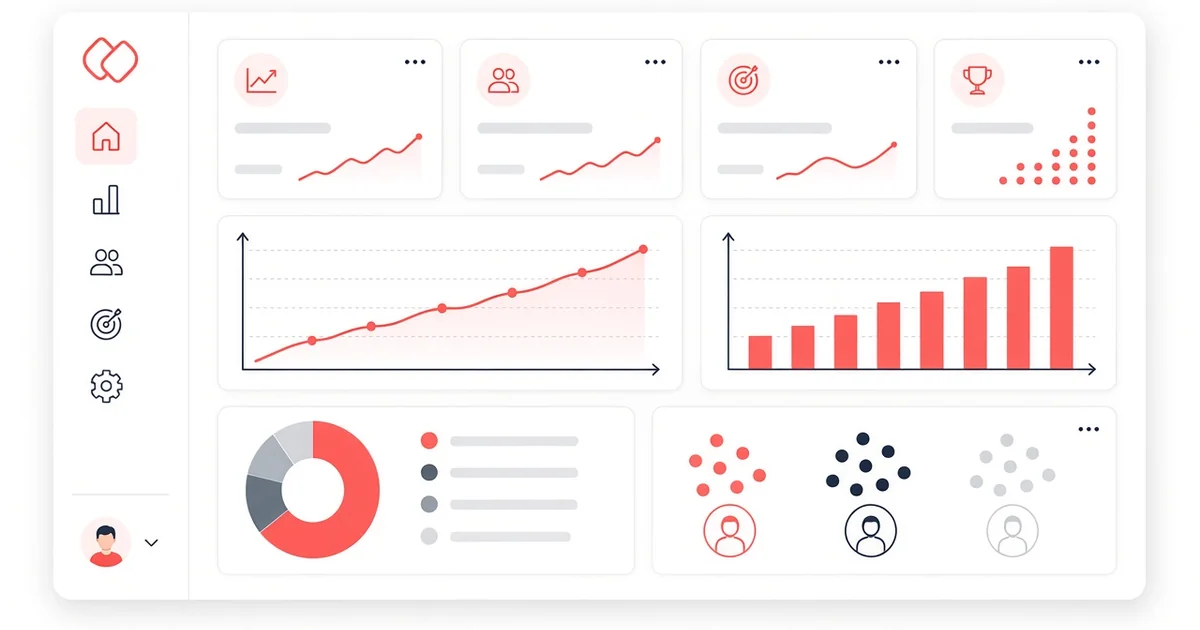
Every bet, deposit, login and support chat tells you something about a player. Customer behavior modeling is the practice of turning that activity into structured views that help your team answer practical questions: Which players are most valuable? Who is drifting away? Whose play has changed in a way that needs a closer look? This guide covers the building blocks of behavior modeling in iGaming, the main model types, and the guardrails that matter in a regulated industry.
What is customer behavior modeling?
Customer behavior modeling uses historical and live activity data to describe, segment or predict how customers act. In iGaming, the customer is the player, and the data typically comes from the player account platform, payment providers, verification checks, game and sportsbook activity and customer support.
From a data protection point of view, much of this work is profiling. The UK Information Commissioner’s Office describes profiling as analyzing, evaluating or predicting aspects of someone’s behavior, characteristics, interests or habits, often to divide people into groups or segments (ICO). That framing is useful even outside the UK: it reminds teams that models are about people, and that their outputs need care.
Why it matters for back-office teams
Behavior models serve several teams from the same data:
- CRM and retention teams use them to understand value and lifecycle stage, and to decide when and how to contact players.
- Risk and fraud teams use them to spot unusual patterns such as linked accounts or bonus abuse.
- Responsible gambling and compliance teams use them to identify changes that may indicate harm. Regulators expect this: Ontario’s AGCO, for example, expects operators to draw on all available data sources to assess risk on a player-by-player basis and to monitor risk profiles for all players (AGCO).
The practical benefit of a single model layer is consistency: the same player is not “high value” in one system and “at risk” in another with no one noticing.
The data behind the models
Good models start with clean, joined-up data. The main inputs are:
- Transactions: deposits, failed deposits, withdrawals and cancelled withdrawals, payment methods.
- Play: stakes, bet frequency, session length, time of day, products and game types.
- Account events: registration, verification status, limit changes, time-outs and self-exclusion.
- Promotions: offers received, claimed and completed.
- Customer contact: support tickets, complaints and chat.
Several of these overlap with what regulators list as indicators of harm, such as spend patterns, time spent gambling, customer-led contact, use of gambling management tools and account indicators (UKGC customer interaction guidance). It is worth designing your data model so the same signals can feed both commercial and protective views.
If a player holds more than one account, models should see all of them together. In Great Britain, operators that allow multiple accounts must relate them to each other so that monitoring and limits apply across all of a customer’s accounts (UKGC LCCP 3.9.1). Feeding these sources in usually means integrations with payment, KYC/AML and game data providers.
Common model types
Descriptive segmentation: RFM
Recency, frequency and monetary value (RFM) is one of the oldest and most widely used segmentation approaches. It groups customers by how recently they transacted, how often, and how much. Marketing research has shown how RFM inputs can be linked to customer lifetime value using probability models of purchase and spending behavior (Fader, Hardie & Lee, Journal of Marketing Research). In iGaming, RFM is a simple, explainable starting point for lifecycle segments such as new, active, at-risk and lapsed players.
Lifetime value
Lifetime value (LTV or CLV) estimates the net value a player is likely to generate over their relationship with your brand. It helps CRM teams decide where retention effort makes sense. Value should never be the only lens, though: a rapidly rising value can also be a sign of escalating, potentially harmful play.
Churn and lapse prediction
Churn models estimate the likelihood that a player will stop playing. They typically use changes in recency and frequency, session patterns and responses to past contact. The output is a prioritized list for retention outreach, ideally with the reasons behind each prediction.
Behavioral clustering
Clustering groups players with similar patterns without predefined labels. Researchers have used this approach on real betting data: a k-means clustering study of first-month internet betting identified a small high-risk subgroup characterized by frequent, intensive betting, high variability in wager size and increasing wager size, 73% of whom later closed their accounts because of gambling-related problems (Braverman & Shaffer, European Journal of Public Health). The same study notes that its markers identified only a small part of the sample, a reminder that clustering supports human review rather than replacing it.
Risk scoring
Risk scores combine several signals into a single indicator of fraud, abuse or harm risk. They work best when they are transparent: a reviewer should see which inputs moved and why. See how real-time risk scoring and player behavior analytics bring this together in one view.
Guardrails for responsible modeling
Keep humans in significant decisions
The ICO highlights risks in automated decision-making, including bias, over-generalization and errors that scale quickly, and notes that people in financially precarious situations may be more susceptible to harm when outcomes are inaccurate (ICO). Using model outputs to prompt a trained reviewer, rather than to close accounts or withhold funds automatically, is a sensible default. Check the data protection rules in each jurisdiction you operate in.
Never let commercial models override player protection
A model that identifies “high-value” players should be checked against harm indicators before anyone acts on it. In Great Britain, VIP or high-value incentive schemes must be offered in a manner consistent with the licensing objectives, and licensees must take into account the Commission’s guidance on high-value customer incentives (UKGC LCCP 5.1.1).
Explain every output
Plain-language reasons (“deposits up sharply this week, three failed deposits, late-night sessions”) make models usable by CRM, risk and RG staff alike, and make decisions easier to document.
Monitor and re-validate
Player behavior, products and promotions change. Re-check model performance regularly and review cases the model missed. AGCO, for example, expects operators to regularly assess how effective their risk monitoring methods are and to correct them when at-risk players are not identified (AGCO).
A practical starting roadmap
- Unify the player view. Join account, payment, play, promotion and support data on one player ID, with linked accounts connected.
- Start with explainable segments. RFM and simple lifecycle stages give quick wins and a shared vocabulary.
- Add value and churn estimates. Use them to prioritize retention, with harm checks built in.
- Layer in risk signals. Fraud, bonus abuse and markers of harm on the same profile, so every team sees the same player.
- Route insights to where teams work. Alerts, dashboards and reports that explain the “why”.
How PlyrPulse fits
PlyrPulse is an iGaming CRM that turns live player activity into clear signals on behavior, value and risk, with plain-language explanations your whole team can act on. It brings CLV and lifecycle segmentation, real-time risk flagging and responsible gaming signals into one back-office view. Explore player behavior analytics, see how it supports bonus abuse detection and responsible gaming, or book a demo.
FAQ
What is the difference between player behavior analytics and customer behavior modeling?
Analytics describes what happened, for example a dashboard of deposits and sessions. Modeling goes a step further and structures or predicts behavior, such as assigning segments, estimating lifetime value or scoring risk.
Do we need machine learning to model player behavior?
Not to start. Rule-based segments such as RFM are explainable and useful on their own. More advanced models can be added once your data is unified and you can validate their results.
Is behavior modeling the same as profiling under data protection law?
Often, yes. The ICO describes profiling as analyzing or predicting aspects of a person’s behavior or interests (ICO). Take advice on the rules that apply where you operate.
Sources
- ICO, “What is ADM?” (automated decision-making and profiling): https://ico.org.uk/for-organisations/uk-gdpr-guidance-and-resources/individual-rights/automated-decision-making-and-profiling/what-is-automated-individual-decision-making-and-profiling/
- AGCO, Guidance for iGaming Operators on Identifying and Supporting Players at Risk of Harm: https://www.agco.ca/en/lottery-and-gaming/guidance-igaming-operators-identifying-and-supporting-players-risk-harm
- UK Gambling Commission, Customer interaction guidance, Requirement 5: https://www.gamblingcommission.gov.uk/guidance/customer-interaction-guidance-for-remote-gambling-licensees-formal-guidance/requirement-5-customer-interaction-guidance-for-remote-gambling-licensees-sr
- UK Gambling Commission, LCCP 3.9.1: https://www.gamblingcommission.gov.uk/licensees-and-businesses/lccp/condition/3-9-1-identification-of-individual-customers-remote
- UK Gambling Commission, LCCP 5.1.1: https://gamblingcommission.gov.uk/licensees-and-businesses/lccp/condition/5-1-1-sr-code
- Fader PS, Hardie BGS, Lee KL, “RFM and CLV: Using Iso-Value Curves for Customer Base Analysis”, Journal of Marketing Research (2005): https://brucehardie.com/papers/rfm_clv_2005-02-16.pdf
- Braverman J, Shaffer HJ, “How do gamblers start gambling: identifying behavioural markers for high-risk internet gambling”, European Journal of Public Health (2012): https://pmc.ncbi.nlm.nih.gov/articles/PMC3324590/